
FY2025 Accomplishments

Throughout FY2025, the ITS Support Services team continued to excel in providing essential technology support across the University of Michigan campuses. Comprising Campus Tech, Customer Relations, Digital Accessibility, Emerging Technology, End User Services, Identity and Access Management, Service Center, and Service Support, our team ensured seamless service delivery through chat, email, phone, and walk-up assistance.
FY25 Support Services Highlights
Exceptional Customer Service
Enhanced customer experience with AI tools and efficient ticket handling, maintaining leadership in service.
Go Blue Mobile AI App
Provides campus with real-time information and integration with OpenAI’s GPT-4.
TeamDynamix Growth
Nine new groups joined TDX, now over 75 total, with improved integration at Michigan Medicine.
474 Zoom Rooms
35% increase on UM-Ann Arbor, preparing for future expansion at Michigan Medicine.
48,000
48,000 linear feet of poster paper printed, with a 36% increase during peak, supporting academics.
$535,000
The Tech Shop had $535,000 in holiday sales, $42,000 savings—a 60% order increase, enhancing service reach.
Delivering Innovative Classroom and Printing Solutions
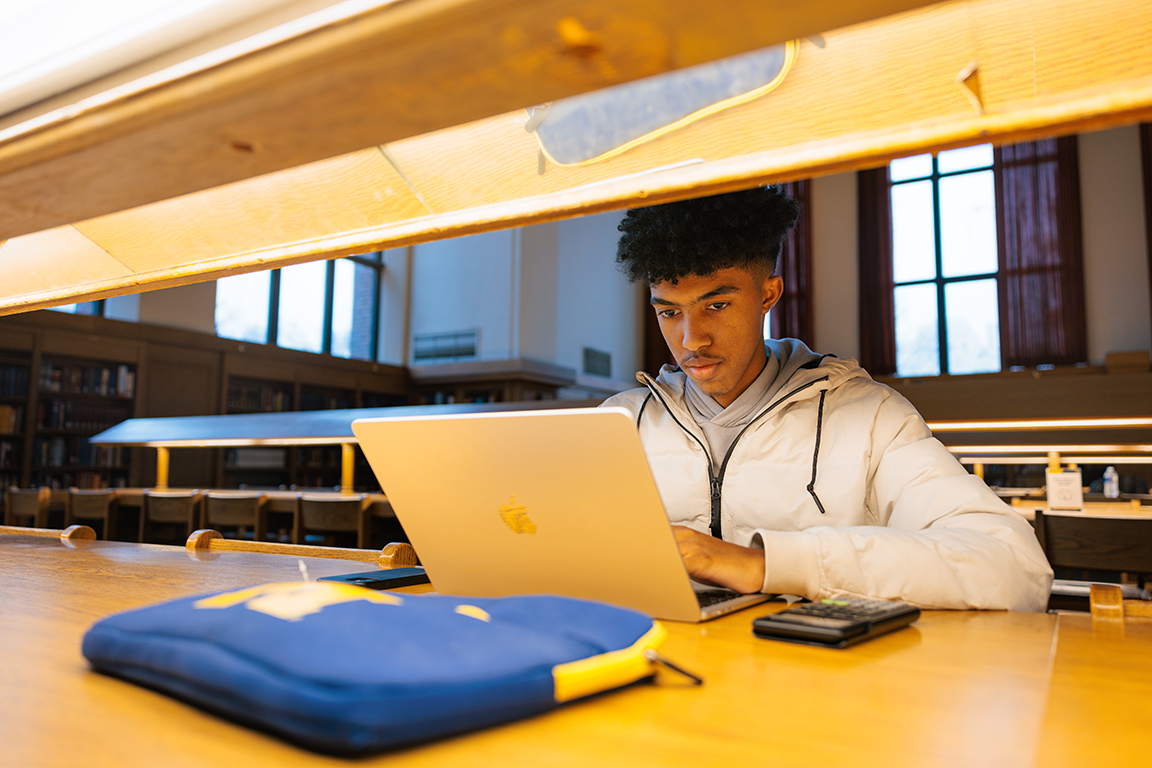
The Zoom Rooms service expanded significantly, growing from 350 to 474 rooms — a 35% increase over FY24. This expansion was complemented by a collaboration with ITS AV and HITS, establishing a pathway to extend Zoom Rooms services to Michigan Medicine customers, thereby broadening opportunities for FY26.
Campus Computing Sites, in partnership with ITS Audiovisual Service, overhauled the instructional technology in Angell Hall Fishbowl classrooms. This modernization saw the integration of high-quality AV systems powered by Zoom Rooms, enhancing lecture recording capabilities alongside remote participation and content sharing through an intuitive interface.
The Sites Poster Printing service continued its upward trend, increasing volume by 20% to 48,000 linear feet. The “poster rush” in April 2025 witnessed a substantial 36% growth compared to the previous year, reaffirming the service’s crucial role in supporting academic presentation needs.
Launch of Go Blue AI App with Maizey Integration
The university launched Go Blue, the first mobile AI app in higher education, providing the campus with real-time information and integration with OpenAI’s GPT-4. The Maizey LTI Connector empowered instructors to create nearly 500 AI chatbots for Canvas, enhancing student engagement with course materials. U-M's AI services are boosted by new features and releases, improving access and effectiveness for campus users. More information can be found in Emerging Technologies Accomplishments.
Empowering Users with Superior Software
In collaboration with Service Support, initiated the transition of UmichITAM SharePoint content to TeamDynamix (TDX) Assets, aligning with ITS ecosystem enhancements. This was capped by securing comprehensive site licenses, including Endnote and Overleaf, to meet compliance and operational requirements efficiently.
Tech Shop: Streamlining Purchases and Expanding Services
Addressing customer feedback, Tech Shop launched a new curbside pickup option at both locations, making it easier to pick-up orders without needing to find parking for nearly 600 orders. Additionally, the Holiday KickOff sale surged by 60% in sales compared to the previous year, totaling $535k and saving customers $42,000 — achievements that increased Tech Shop’s prominence and accessibility.
Tech Repair: Leadership in Campus Repair Services
Tech Repair cemented its position as the leading Apple Authorized Service Provider in higher education, handling unparalleled repair volumes due. Thanks in large to our team of highly trained technicians, Tech Repair reduced downtime at competitive prices. New status communication tools, utilizing a dynamic progress bar, have streamlined repair updates and improved customer interactions.
Advanced Tools for User Support and Service Optimization
The Tech Help team facilitated 1,250 laptop loans via the Sites @ Home program and processed over 12,000 MCard transactions. By adopting dedicated asset management within TDX, Tech Help has improved efficiency and user experiences through automation.
TDX expanded further by onboarding nine groups to individual TDX applications and adding three to Campus Tickets, now boasting over 75 active user groups and processing more than 3,700 ticket transfers, including collaborations with Michigan Medicine.
Collaboration Services championed lifecycle improvements in Google Workspace by instituting annual renewal processes for shared drives and accounts. New self-service tools considerably reduced collaborators’ ticket workload by 25%, enhancing service efficiency.
Enhanced Campus Digital Accessibility Offerings and Services
Two key tools designed to enhance digital accessibility launched this year: Grackle and Panorama. Grackle, an add-on for Google Docs, Slides, and Sheets, empowers users to improve content accessibility for students and colleagues. Panorama, integrated into Canvas, offers data dashboards on course content accessibility, along with instructor tools for content creation and remediation and student tools for generating alternate formats. These tools significantly advance the accessibility of educational and work materials, supporting compliance with accessibility standards.
MiWorkspace: Future-Proofing Computing Infrastructure
MiWorkspace successfully transitioned substantial storage volumes off legacy platforms with minimal customer disruption. The migration of Mac service infrastructure to the cloud ensured future-proofing, leveraging advanced features for deployment and management.
Additionally, MiWorkspace developed self-service tools for Windows 10 upgrades, ahead of the OS’s end-of-life date, and supported over 1,000 computer replacements alongside 5,600 unit customer onboardings and offboardings.
These accomplishments reflect the ITS Support Services team's commitment to innovation, efficiency, and exceptional service delivery across the U-M community, setting a robust foundation for continued success in meeting evolving technological demands