
FY2025 Accomplishments
Research Excellence, Cutting-Edge Infrastructure
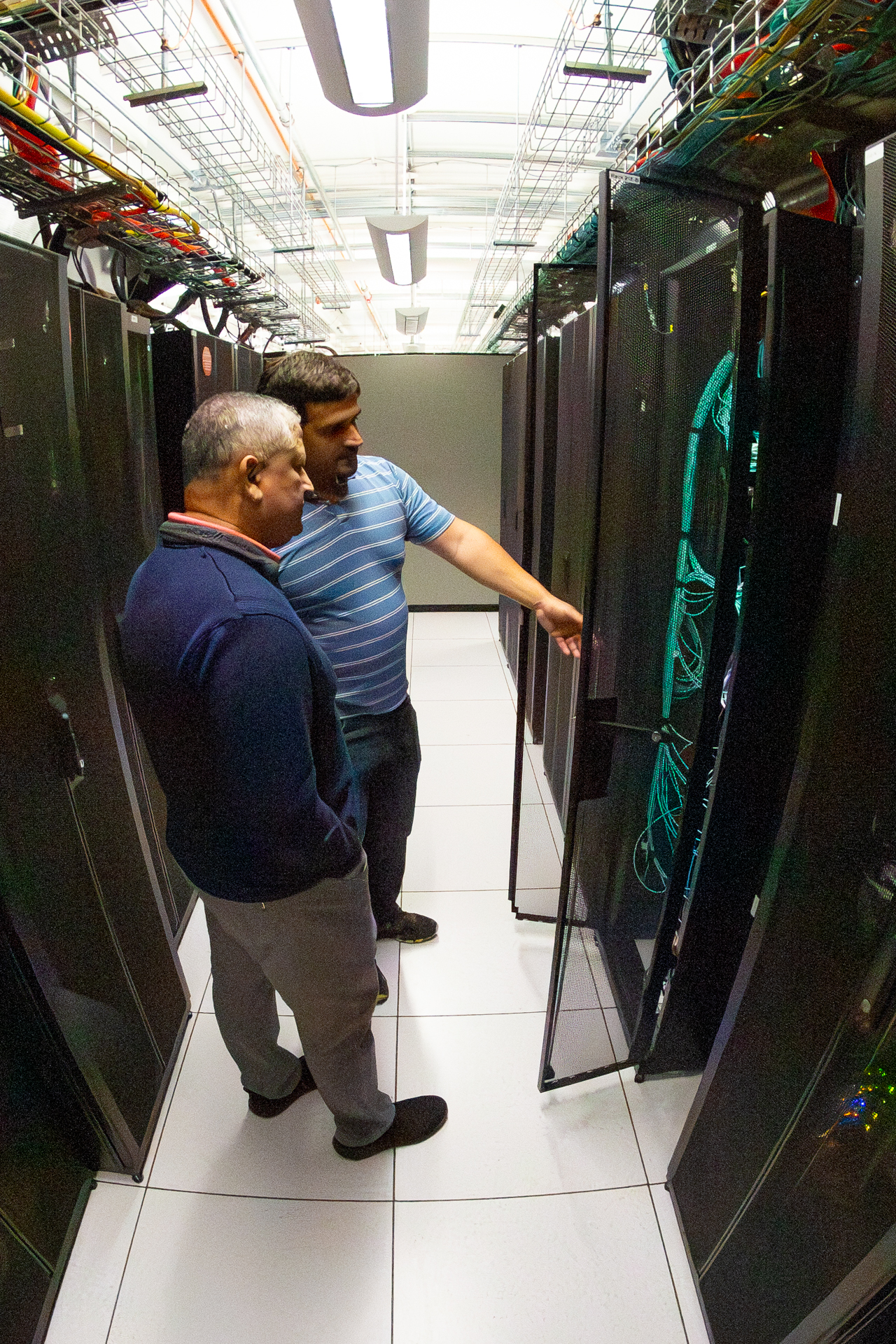
ARC made significant upgrades in GPUs and hardware in FY2025, constituting the highest performance improvements in the unit’s entire history. Comprising of startup expenditures, record-breaking investments, and faculty awards, this expansion of ARC services provides necessary infrastructure to a wide variety of research initiatives and underscores ARC's role as a central hub of support and collaboration across campus.
As a notable example, U-M faculty Venkat Raman (Aerospace Engineering), Alex Gorodetsky (Aerospace Engineering), and Aaron Towne (Mechanical Engineering) received a $2M award from the Department of Defense to develop an AI-driven scientific computing resource. As foundational components in machine learning and AI technologies, this new computing resource will rely heavily on GPUs to enable faster, more highly detailed computer simulations to solve complex physics problems. Although this project targets, specifically, the field of hypersonic flight, it represents an overall increase in research capability and opens the door to future, interdisciplinary applications.
ARC Research Purchased Hardware (ARPH)
Faculty Owned Equipment (FOE) underwent a service refresh, which included a name change: ARC Research Purchased Hardware (ARPH)–reflecting an improved support for systems external to ARC, purchased by researchers for specific needs.
To offer greater flexibility and value to users, ARC launched two distinct integration options for adding hardware to ARC’s high-performance computing clusters:
- Condo model: research-purchased hardware is exclusively available to the researcher, offering greater customization for performance and storage.
- Timeshare model: research-purchased hardware becomes part of an existing shared pool with shared accessibility, offering burst capacity, better protection against hardware failures, and the opportunity to receive HPC credit.
Turbo Upgrade
Turbo also underwent a major refresh this year, pivoting from slow, mechanical hard drives to the faster and more reliable Flash memory. Flash provides a greater performance while also using less energy and lower failure rates. Because of this upgrade, Turbo is now over 14 petabytes in size and regularly reaches speeds of over 10 gigabytes per second, going as high as 25 gigabytes per second while in real use — that’s fast enough to download a high quality version of the recent season of Severance in one second! This data transfer rate accounts for as much as half of the university’s main internet traffic!
Data Den Doubles in Capacity
Data Den now has over 25,000 terabytes of capacity, corresponding to ARC’s strategic plan to support over 100,000 terabytes by 2030. This cost increase in data storage effectively supports university policies, such as the standards for research data stewardship (SPG 303.06), as well as external agency requirements—all while reducing cost and overall environmental impact.
The 4,548+ tapes in these two secure data centers represent 2,712 miles of tape — that’s enough tape to cover the distance between Ann Arbor and the Amazon Rainforest and enough storage space to house more data than the Library of Congress!
Responsible, Secure Management of Human Genomic Data
Starting in January 2025, the National Institutes of Health (NIH) announced an update regarding data management and access practices of human genomic data, introducing changes focusing on modernizing security standards and aligning with frameworks set forth by the National Institute of Standards and Technology (NIST).
Currently, the Secure Enclave Services, a virtual server environment operated by ARC, is the only service across campus that meets these updated requirements, providing U-M researchers who work with genomic datasets with high-performance, secure, and flexible computing environments. To further support researchers and data security, ITS seeks to expand campus offerings that meet security requirements for other sensitive data classifications, such as Controlled Unclassified Information (CUI) and the Cybersecurity Maturity Model Certification (CMMC) from the U.S. Department of Defense.
/scratch Upgraded and Expanded
Great Lakes /scratch, a directory designated for temporary data storage, was upgraded to a faster controller and expanded to 2.4 petabytes, that’s more storage than 322 million GameBoy cartridges. These changes have not only enhanced data protection, but have also allowed for greater efficiency in managing computing resources and workloads.
ARC Website Migration
Last summer, the ARC website received a complete glow-up with a redesign more closely aligned to ITS branding standards. Behind the scenes, improvements were made to the overall functionality and accessibility of the site, reducing potential barriers between ARC’s services and U-M researchers who would benefit from them. There’s even a new ARC Maizey in the mix, an AI chatbot available 24/7 to field inquiries or help researchers navigate which ARC service would best fit their needs.
UMRCP
The U-M Research Computing Package is a comprehensive suite of resources, offering high-performance computing hours, secure enclave services, replicated storage, and extensive archive capacity at no cost to members of the U-M community. Designed to meet the diverse needs of researchers, instructors, student teams, including Michigan Medicine, this package demonstrates ARC's dedication to nurturing an innovative research community.